Category: Uncategorized

  • Manhole Rehabilitation vs Replacement: Why Excavation Is Often the Wrong Solution

    Manhole Rehabilitation vs Replacement: Why Excavation Is Often the Wrong Solution

    Quantum Industrial Solutions Inc. • May 12, 2026

    Why Replacing a Deteriorated Manhole Is Often the Wrong Call?

    When a manhole fails, excavation often feels like the obvious fix. In many cases, however, manhole rehabilitation is the more efficient and cost-effective solution. Here’s what engineers and asset owners should consider before approving full replacement.
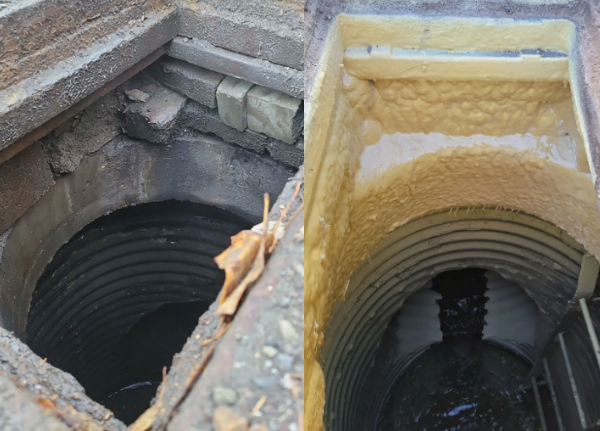
    A municipality discovers a deteriorated manhole on a critical interceptor. The concrete is spalling. There’s active infiltration. H₂S corrosion has eaten into the wall profile. The default recommendation: replace it.

    Before that decision gets made, it’s worth asking a harder question: What is replacement actually buying you — and at what cost?

    The real cost of manhole replacement

    Full manhole replacement means excavation. That means traffic management, potential road closures, disruption to nearby utilities, bypass pumping, and extended outage windows. In urban corridors or near critical infrastructure — a gas main, a live sewer crossing, a transit corridor — excavation risk escalates quickly.

    Direct construction cost is only part of the picture. Project owners also absorb schedule delays, third-party coordination costs, and the risk that excavation uncovers additional problems that weren’t priced.

    On a recent Metro Vancouver project, manholes MH 38 and MH 39 sat directly above a live gravity sewer and adjacent to the Trans Mountain gas main. Full replacement was not feasible. QIS rehabilitated both structures above live flow, without bypass pumping, with zero WorkSafeBC orders — and returned them to service in under 30 minutes per structure.

    When rehabilitation is the right answer

    A spray-applied structural liner — specifically SprayRoq SprayWall — can restore a deteriorated manhole to full structural and corrosion-resistant performance without excavation. The liner is applied in confined space using plural-component heated equipment, cures rapidly, and acts independently of the existing concrete if the host substrate degrades further.

    The key conditions that make rehabilitation viable:

    The host structure still has geometric integrity

    If the manhole is spalling and corroded but hasn’t collapsed or significantly deformed, spray-applied rehabilitation is a legitimate structural option. The liner is designed to act as an independent structural element, not just a protective coating.

    Active infiltration can be controlled prior to lining

    Infiltration at joints, wall interfaces, or penetrations is addressable through injection grouting — typically hydrophobic foam to stop flow, followed by hydrophilic foam to seal permanently. QIS sequences this before lining as standard practice.

    Access and confined space conditions are manageable

    Modern confined space protocols — supplied air, continuous gas monitoring, real-time upstream level verification, tripod retrieval — allow work to proceed safely above live flow. The question isn’t whether the environment is challenging. The question is whether the planning and competency are adequate to the environment.

    What this means for project engineers and asset owners

    Rehabilitation doesn’t mean cutting corners. A properly engineered spray-applied liner — designed to the correct thickness using deflection-based methodology, applied over a properly prepared CSP 4–6 substrate, with documented QA/QC including DFT verification and ASTM/NACE compliance — is a defensible structural decision.

    For engineers worried about specifying something unfamiliar: the data is there. SprayRoq’s flat-wall design methodology accounts for square geometry, saturated soil and hydrostatic loading, and partial concrete deterioration. The liner thickness is calculated, not estimated.

    For project managers concerned about schedule: the work is typically completed in a fraction of the time required for excavation and replacement, with no bypass pumping required on gravity systems with manageable flow conditions.

    For asset owners concerned about long-term performance: the liner is independent of the host concrete. If the substrate continues to deteriorate after lining, structural capacity is retained.

    The decision framework

    Before approving manhole replacement, run this checklist:

    Is the structure geometrically intact enough to accept a liner? Has infiltration control been assessed? Are confined space conditions manageable with proper planning? Is excavation actually feasible given the surrounding constraints? What is the true, fully-loaded cost of replacement versus rehabilitation?

    If the answers point toward rehabilitation, the technology exists, the track record is real, and the contractor competency question is the only remaining one to resolve.

    QIS has completed manhole rehabilitation under live flow, above critical infrastructure, in H₂S-rated sanitary environments, with zero service interruptions and documented 50+ year design life outcomes. If you have a structure that warrants a second opinion before replacement is approved, we’re worth a conversation.

    Have a deteriorated manhole that’s been flagged for replacement?
    Contact QIS before the excavation gets approved.

  • What is SIPP Pipe Lining?

    What is SIPP Pipe Lining?

    SIPP – A Complete Guide to Trenchless Rehabilitation

    Quantum Industrial Solutions Inc. • April 08, 2026

    SIPP pipe lining (Spray-In-Place Pipe lining) is a modern trenchless method used to rehabilitate pipelines and underground infrastructure without excavation. This technology allows damaged pipes, manholes, and culverts to be restored efficiently while minimizing disruption to surrounding areas.

    At Quantum Industrial Solutions (QIS), we use advanced SprayWall® technology to deliver high-performance structural lining solutions across Canada and the United States.

    What is SIPP Pipe Lining?

    SIPP pipe lining is a trenchless rehabilitation process that involves applying a spray-applied lining directly to the interior surface of a pipe or structure. This creates a seamless, durable layer that restores structural integrity and extends the lifespan of existing infrastructure.

    Unlike traditional replacement methods, SIPP does not require excavation, making it a faster, more cost-effective solution for infrastructure repair.

    How Does SIPP Pipe Lining Work?

    The SIPP pipe lining process involves several key steps:

    Inspection and Cleaning: The pipe or structure is inspected and cleaned to remove debris, corrosion, and contaminants.

    Surface Preparation: Any damaged areas are repaired to ensure proper adhesion of the lining material.

    Spray Application: A specialized material, such as SprayWall®, is applied using a spray system to create a seamless inner lining.

    Curing: The material cures quickly, forming a strong, durable, and corrosion-resistant layer.

    Benefits of SIPP Pipe Lining

    Trenchless Installation: No excavation is required, reducing disruption to surrounding areas.

    Cost-Effective: Eliminates the need for full pipe replacement.

    Rapid Installation: Faster completion compared to traditional methods.

    Corrosion Resistance: Provides long-term protection against environmental damage.

    Extended Lifespan: Reinforces existing infrastructure and increases durability.

    Where is SIPP Pipe Lining Used?

    SIPP pipe lining is widely used in both municipal and industrial applications, including:

    • Pipelines and sewer systems
    • Manholes and culverts
    • Underground infrastructure
    • Industrial facilities
    • Water and wastewater systems

    This method is ideal for projects requiring efficient rehabilitation and long-term performance.

    SIPP vs Traditional Pipe Replacement

    Traditional pipe replacement often requires excavation, which can be costly and disruptive. In contrast, SIPP pipe lining offers a trenchless alternative that minimizes downtime and reduces project costs.

    By restoring existing infrastructure rather than replacing it, SIPP provides a sustainable and efficient solution for modern infrastructure challenges.

    SprayWall® and Structural Lining

    SprayWall® technology is a leading solution used in SIPP applications. It provides a high-build, spray-applied structural lining that creates a seamless, joint-free barrier inside pipes and structures.

    This technology enhances structural strength, improves corrosion resistance, and delivers long-term performance in demanding environments.

    SIPP Pipe Lining in North America

    SIPP pipe lining is increasingly used across Canada and the United States as infrastructure continues to age. Municipalities and industrial operators rely on trenchless technologies to maintain performance while reducing costs and environmental impact.

    At QIS, we support infrastructure rehabilitation projects across North America, delivering reliable and durable solutions tailored to each application.

    Frequently Asked Questions

    What does SIPP stand for?
    SIPP stands for Spray-In-Place Pipe, a trenchless method used to rehabilitate pipelines and underground structures.

    How long does SIPP lining last?
    SIPP lining is designed for long-term performance and can extend the lifespan of infrastructure for decades when properly applied.

    Is SIPP pipe lining cost-effective?
    Yes, SIPP pipe lining is a cost-effective alternative to traditional pipe replacement because it reduces labor, excavation, and downtime.

    For more information about QIS services and other projects, please contact us

  • Concrete Pipe Joint Sealing with Grout and SprayWall

    Concrete Pipe Joint Sealing with Grout and SprayWall

    Sealing Concrete Pipe Seams with Chemical Grout and SprayWall: A Long-Term Solution for Infiltration and Abrasion

    David Sorokovsky • July 23, 2025

    Concrete pipe joint sealing is essential for preventing water infiltration and maintaining the integrity of aging infrastructure systems.

    At Quantum Industrial Solutions (QIS), we deliver practical and durable rehabilitation solutions for aging concrete infrastructure. One of the most common challenges in concrete pipelines is joint infiltration and surface deterioration at the seam locations. To address this, our team applies a two-step system combining chemical grouting and SprayWall structural lining.

    What is Concrete Pipe Joint Sealing?

    Concrete pipe joint sealing is a rehabilitation method used to stop water infiltration at pipe joints using specialized materials such as chemical grout and protective linings.

    Common Problems in Concrete Pipe Joints

    Over time, precast concrete pipe joints can develop small gaps due to:

    • Ground movement
    • Improper installation
    • Aging and shrinkage
    • Hydrostatic pressure

    These gaps allow groundwater infiltration into the system, leading to:

    • Increased treatment costs
    • Soil erosion around the pipe
    • Flow blockages or debris accumulation
    • Risk of pipe settlement and failure

    Pipe Joint Sealing Process Using Grout and SprayWall

    We use a targeted, two-layer approach:

    Seam Sealing with Chemical Grout

    We inject a high-performance chemical grout into pipe joints. This material expands and bonds to the surrounding concrete, filling any voids or cracks.

    Purpose:

    • Stops infiltration instantly
    • Fills irregular gaps and smooths transitions
    • Bonds well to moist or uneven surfaces

    Protective Lining with SprayWall

    After grouting, we spray SprayWall, a high-build polyurethane structural lining, over the treated area.

    Purpose:

    • Protects the grout from abrasion due to high flow or debris
    • Enhances long-term durability
    • Seals the entire interior surface for a watertight system
    • Adds structural reinforcement and corrosion protection

    SprayWall is applied at a thickness based on project needs (typically 6–10 mm), creating a continuous, seamless liner across the full pipe wall—including joints.

    Benefits of This Method:

    • Stops water infiltration
    • Extends pipe service life
    • Reduces maintenance and treatment costs
    • Minimal downtime (fast curing)
    • Compatible with various pipe sizes and conditions

    Where This System Works Best:

    • Sanitary or storm sewers with leaking joints
    • Culverts and large-diameter concrete pipelines
    • Rehabilitation of aging infrastructure where full pipe replacement is not practical

    Our concrete pipe joint sealing solutions are used across Canada and the United States to restore infrastructure and prevent long-term system failures.

    Contact Us today to learn how we can help seal your concrete pipe system and protect your infrastructure investment. Our experienced team provides turn-key solutions across Western Canada, including inspection, surface preparation, grouting, and coating.

  • Spray Foam Ditch Breaks

    Spray Foam Ditch Breaks

    Spray Foam Ditch Breaks: A Modern Solution for Pipeline Protection

    David Sorokovsky • July 23, 2025

    Spray foam ditch breaks are an effective solution for controlling water flow and protecting pipelines during trenching and construction projects.

    In pipeline construction and trenching projects, managing water flow is critical—especially on slopes and in wet areas. At Quantum Industrial Solutions (QIS), we use an innovative method to control water movement and protect buried infrastructure: spray foam ditch breaks using B5021-HFO.

    What Are Spray Foam Ditch Breaks?

    What Is a Ditch Break?

    A ditch break, also known as a trench breaker, is a barrier installed inside a trench. Its purpose is to:

    • Prevent water from flowing freely through the trench
    • Reduce soil erosion
    • Protect pipelines from being exposed or shifted
    • Control water drainage during and after construction

    Traditional ditch breaks use sandbags or compacted clay, but these materials are time-consuming to install and difficult to compact evenly.

    Benefits of Spray Foam Ditch Breaks

    Why We Use B5021-HFO Spray Foam?

    B5021-HFO is a two-component spray polyurethane foam designed specifically for large-volume ditch breaks. It is fast, effective, and environmentally friendly.

    Key Benefits:

    • Zero ozone-depleting substances
    • Based on renewable and recycled materials
    • Can be sprayed in thick layers (up to 6″) without burning or splitting
    • Fast curing – ready for backfilling within 1 hour
    • Works in cold weather (as low as -20°C)

    This foam expands quickly and forms a strong, waterproof block inside the trench. It bonds well to the surrounding soil and pipe, creating a tight seal that resists water infiltration.

    Installation Highlights

    At QIS, we follow strict procedures to ensure quality:

    • Material heated to 35–45°C before use
    • Density checked on-site before spraying
    • Installed in layers with 20-minute cure time between passes
    • Backfilling within 1–48 hours to avoid UV exposure

    The final result is a durable, long-lasting ditch break that protects critical infrastructure and minimizes environmental impact.

    Want to Know More?

    Spray foam ditch breaks are widely used across Canada and the United States as a reliable solution for pipeline protection and water control.

    If you’re planning a pipeline or trenching project, contact QIS for expert support. Our team is trained in foam ditch break installation and can provide reliable service across British Columbia, Canada, and the United States.

    For more information about our services and other projects, please contact us

  • What is Pipeline Rehabilitation? Cost-Effective Solutions Explained

    What is Pipeline Rehabilitation? Cost-Effective Solutions Explained

    Innovative Pipeline Rehabilitation: A Cost-Effective, Long-Term Solution Using EonCoat and SprayWall

    David Sorokovsky • July 23, 2025

    Pipeline rehabilitation is the process of restoring and strengthening existing pipelines without full replacement. It is widely used in municipal and industrial infrastructure to extend service life, reduce costs, and minimize disruption.

    Quantum Industrial Solutions (QIS) delivers advanced pipeline rehabilitation solutions using trenchless technologies such as SprayWall® structural lining and corrosion protection systems across Canada and the United States.

    At QIS, we specialize in innovative trenchless rehabilitation systems that extend the life of aging pipelines, culverts, and stormwater infrastructure with maximum durability and minimal environmental impact. Our latest method combines void stabilization with high-density polyurethane foam, EonCoat Corrosion Protection, and SprayWall Structural Lining, anchored mechanically for long-term performance. This approach delivers exceptional protection against corrosion, abrasion, and infiltration—all at a fraction of the replacement cost.

    What is Pipeline Rehabilitation?

    Pipeline Rehabilitation Process

    1. Subgrade Void Stabilization
      The process begins with the injection of high-density polyurethane foam beneath the culvert invert. This foam expands to fill and stabilize voids without requiring excavation, creating a uniform and stable foundation. Its closed-cell structure eliminates water migration, crucial for aging culverts with bottom degradation.
    2. Corrosion Protection with EonCoat
      Once the substrate is stabilized, we apply EonCoat Corrosion Protection Coating (ECP) to the lower interior surface (invert and 1 meter up the walls). EonCoat is an inorganic, ceramic-forming coating that reacts chemically with steel, forming a dense passivated layer. Unlike traditional polymer coatings, EonCoat:
    • Is zero-VOC, non-flammable, and moisture tolerant
    • Bonds directly to the steel via chemical reaction (not just mechanical adhesion)
    • Has no recoat window and does not allow underfilm corrosion
    • Offers long-term rust resistance even in marine and immersion environments (ASTM B117: 4000 hours salt fog = Rating 10, no rust)

    With 95%+ solids and a DFT of 500–900 microns, EonCoat provides a robust foundation for overcoating while protecting critical areas where corrosion is most aggressive.

    1. Abrasion-Resistant Liner: SprayWall
      The structural liner consists of SprayWall®, a polyurethane-modified polyurea, applied at 7 mm DFT across the full circumference. SprayWall forms a high-strength, monolithic liner with excellent adhesion and extremely rapid return to service. Technical advantages include:
    • Compressive Strength: Over 85 MPa (12,300 psi) per ASTM D695
    • Abrasion Resistance: Loss < 2 mg per ASTM D4060
    • Flexibility: Elongation up to 8–10% for minor substrate movement
    • Return to Service: As little as 1 hour depending on conditions

    Combined with proper surface preparation (SSPC-SP7) and controlled DFT, SprayWall restores hydraulic capacity and creates a highly abrasion-resistant interior surface.

    1. Mechanical Anchoring System
      After the SprayWall cures, we drill and install Tapcon™ screws in a 500 mm x 500 mm grid along the bottom and 1 meter of both side walls. This mechanical anchoring locks the liner to the culvert structure, preventing delamination due to hydrostatic forces or vibration. Every screw is sealed with waterproofing mastic to prevent bi-directional infiltration.

    Why This System Is Cost-Effective and Long-Lasting

    • No Excavation = Lower Cost
      Traditional culvert replacement can cost 3–5× more and cause environmental and traffic disruption. Our trenchless rehab avoids excavation, minimizing labor, equipment, and site restoration costs.
    • Extended Service Life
      The combined system exceeds 50 years of projected life under aggressive conditions. EonCoat chemically halts corrosion at the root, while SprayWall protects against mechanical wear. This dual-layer approach far outlasts polymer-only liners or sprayed mortars.
    • Minimal Downtime
      The fast curing nature of both EonCoat and SprayWall allows for rapid project completion, often within a few days. Inlet/outlet flow can resume quickly, a key benefit for municipalities.
    • Sustainability and Safety
      Both coatings are water-based, non-toxic, and zero-VOC, eliminating the need for confined space ventilation or hot work permits. This contributes to greener project profiles and lower compliance costs.

    Conclusion

    Pipeline rehabilitation is one of the most effective solutions for maintaining infrastructure performance while reducing costs and environmental impact.

    This engineered system—void stabilization + EonCoat + SprayWall + mechanical anchoring—offers superior structural reinforcement, corrosion control, and waterproofing in a single rehabilitation method. With reduced installation time and a longer design life, it’s one of the most cost-effective and technically robust solutions available for municipal and industrial culvert renewal today.

    For more information about our services and other projects, please contact us

  • How Quality and Safety Standards Elevate Infrastructure Projects

    How Quality and Safety Standards Elevate Infrastructure Projects

    How Quality and Safety Standards Elevate Infrastructure Projects

    David Sorokovsky • February 28, 2025

    Infrastructure projects, from bridges to water systems, are critical to the functioning of society.
    The success of these projects hinges on adherence to rigorous quality and safety standards.
    These standards ensure not only the longevity and reliability of infrastructure but also the safety of workers, users, and the environment.

    Why Quality and Safety Standards Matter

    • Protecting Public Safety Infrastructure failures can have catastrophic consequences, including loss of life, property damage, and environmental harm. Standards help mitigate risks by setting clear guidelines for design, construction, and maintenance.
    • Ensuring Durability Adhering to quality standards ensures that infrastructure can withstand environmental stresses, usage demands, and aging, reducing the need for frequent repairs or replacements.
    • Boosting Economic Efficiency Projects built to high standards are less likely to experience costly delays, overruns, or failures. This enhances economic efficiency and ensures better allocation of public and private resources.
    • Building Public Trust Compliance with safety and quality standards fosters confidence among stakeholders, including governments, communities, and investors.

    Key Quality and Safety Standards in Infrastructure

    • ISO Standards The International Organization for Standardization (ISO) provides globally recognized standards for various aspects of infrastructure, such as quality management (ISO 9001), environmental management (ISO 14001), and risk management (ISO 31000).
    • OSHA Regulations The Occupational Safety and Health Administration (OSHA) establishes safety guidelines to protect workers on construction sites, covering areas like fall protection, equipment safety, and hazardous material handling.
    • Building Codes and Specifications Local and national building codes set minimum requirements for materials, design, and construction practices, ensuring structural integrity and safety.
    • Industry-Specific Standards Different sectors have tailored standards. For example, the American Association of State Highway and Transportation Officials (AASHTO) sets guidelines for transportation infrastructure, while the American Water Works Association (AWWA) focuses on water systems.
    • Benefits of Adhering to Quality and Safety Standards
    • Enhanced Project Outcomes Standards provide a benchmark for excellence, ensuring that projects meet their intended goals without compromising safety or functionality.
    • Reduced Risk of Failures Stringent testing, inspections, and compliance measures minimize the likelihood of structural failures or safety incidents.
    • Improved Worker Safety Safety standards protect construction workers from common hazards, reducing injuries, illnesses, and fatalities on job sites.
    • Sustainability Many modern standards incorporate environmental considerations, promoting the use of sustainable materials and practices.

    Case Studies Highlighting the Importance of Standards

    • Boston’s Big Dig This massive urban infrastructure project faced significant challenges due to lapses in quality control and safety compliance. Cost overruns and structural issues highlighted the importance of rigorous adherence to standards.
    • Millennium Bridge, London The initial design of the Millennium Bridge resulted in excessive swaying, requiring retrofitting to meet safety standards. This example underscores the need for thorough testing and compliance during the design phase.
    • California High-Speed Rail The project’s strict adherence to environmental and safety standards has set a benchmark for sustainable and safe transportation infrastructure.
    • Challenges in Implementing Quality and Safety Standards
    • Cost Concerns Meeting stringent standards can increase initial project costs, deterring some stakeholders from full compliance.
    • Complexity of Regulations Navigating overlapping local, national, and international standards can be challenging, especially for large-scale projects.
    • Lack of Skilled Workforce Proper implementation of standards requires trained professionals who understand and can apply them effectively.
    • Resistance to Change Established practices may conflict with newer standards, leading to resistance from contractors or stakeholders.

    Best Practices for Compliance

    • Early Integration of Standards Incorporate quality and safety standards during the planning and design phases to avoid costly adjustments later.
    • Regular Training Equip workers and project managers with up-to-date knowledge of applicable standards and best practices.
    • Third-Party Audits Independent inspections and audits ensure unbiased assessments of compliance and identify potential areas for improvement.
    • Leveraging Technology Use digital tools like Building Information Modeling (BIM) and project management software to streamline compliance with quality and safety requirements.
    • The Future of Quality and Safety in Infrastructure
    • Emerging technologies and innovations are set to elevate quality and safety standards further:
    • Smart Materials Materials that monitor their own performance, such as self-healing concrete, will enhance durability and reduce maintenance needs.
    • AI-Driven Inspections Artificial intelligence can analyze vast amounts of data from sensors and drones, identifying potential risks and ensuring compliance in real time.
    • Sustainability Metrics Future standards will increasingly focus on metrics that quantify environmental impact, promoting green infrastructure practices.
    • Global Harmonization of Standards Efforts to align international standards will simplify compliance for multinational projects, fostering collaboration and innovation.

    Quality and safety standards are foundational to the success of infrastructure projects.
    By prioritizing these standards, stakeholders can ensure the longevity, functionality, and safety of their investments while fostering public trust and sustainability.
    As technology and awareness advance, the role of standards in shaping resilient and efficient infrastructure will only grow, paving the way for a safer and more sustainable future.

  • The Environmental Impact of Using Sustainable Materials in Infrastructure

    The Environmental Impact of Using Sustainable Materials in Infrastructure

    The Environmental Impact of Using Sustainable Materials in Infrastructure

    David Sorokovsky • February 27, 2025

    As global concerns about climate change and environmental degradation intensify, the construction industry is under increasing pressure to adopt more sustainable practices.

    Infrastructure projects, which traditionally consume vast amounts of resources and generate significant waste, are now turning to sustainable materials to minimize their environmental footprint.

    These materials not only reduce negative impacts but also enhance the durability and efficiency of infrastructure systems.

    The Importance of Sustainability in Infrastructure

    Infrastructure projects—such as bridges, roads, buildings, and pipelines—have historically relied on energy-intensive materials like concrete, steel, and asphalt.

    While these materials are essential for structural integrity, their production and use contribute to greenhouse gas emissions, resource depletion, and pollution.

    Sustainable materials address these issues by:

    Reducing Carbon Footprints: Many sustainable materials have lower embodied carbon, meaning they require less energy to produce and emit fewer greenhouse gases during their lifecycle.

    Enhancing Resource Efficiency: Recycled and renewable materials decrease the demand for virgin resources, conserving natural ecosystems.

    Improving Long-Term Performance: Advanced sustainable materials are designed to last longer, reducing the frequency of repairs and replacements.

    Common Sustainable Materials in Infrastructure

    Recycled Aggregates Recycled concrete and asphalt aggregates are used in road construction and building foundations. These materials reduce the need for mining natural aggregates and divert waste from landfills.

    Fly Ash and Slag Cement Byproducts of coal combustion and steel production, fly ash and slag cement are used as supplementary cementitious materials in concrete. They enhance durability while reducing the carbon emissions associated with traditional Portland cement.

    Bamboo As a fast-growing renewable resource, bamboo is increasingly used in construction for scaffolding, flooring, and even structural components. It offers high strength-to-weight ratios and sequesters carbon during its growth.

    Cross-Laminated Timber (CLT) CLT is a sustainable alternative to traditional steel and concrete for buildings. Made from layered wood panels, it offers exceptional strength and thermal insulation while being renewable and biodegradable.

    Bioplastics and Biocomposites Derived from plant-based materials, bioplastics and biocomposites are used in various infrastructure applications, including piping, insulation, and road materials.

    Green Roof Systems Living roofs covered with vegetation reduce urban heat islands, manage stormwater, and improve air quality. They also extend the lifespan of roofing materials by shielding them from UV radiation and extreme temperatures.

    The biggest enviromental benefits?

    • Reduced Emissions: Sustainable materials often have lower production emissions, helping to combat climate change.
    • Waste Reduction: Using recycled materials diverts waste from landfills and reduces the need for new resource extraction.
    • Improved Ecosystems: Renewable materials help preserve natural habitats and biodiversity.

    Economic Advantages?

    • Lower Lifecycle Costs: Durable materials reduce maintenance and replacement expenses over time
    • Energy Efficiency: Materials with high thermal performance lower energy consumption in buildings and infrastructure systems.
    • Government Incentives: Many governments offer financial incentives for projects that prioritize sustainability.

    Social Impact?

    Healthier Communities: Non-toxic materials improve indoor air quality and reduce health risks for residents and workers.

    Job Creation: The shift to sustainable materials supports industries focused on recycling, renewable resources, and innovative technologies.

    Challenges in Adopting Sustainable Materials

    Despite their benefits, integrating sustainable materials into infrastructure projects presents some challenges:

    • Higher Initial Costs: Although lifecycle costs are lower, upfront expenses for sustainable materials can be higher than traditional options.
    • Limited Availability: In some regions, sustainable materials are not readily available, leading to logistical challenges.
    • Lack of Awareness: Many stakeholders are unfamiliar with sustainable materials and their potential benefits, slowing adoption rates.
    • Technical Limitations: Some sustainable materials may not yet match the performance of traditional counterparts in specific applications.
    • Real-World Applications of Sustainable Materials

    The Brooklyn Bridge Park This urban park incorporates recycled materials, including reclaimed wood and sustainably sourced stone, to create a green, functional public space. Its design reduces stormwater runoff and promotes biodiversity.

    The Bosco Verticale (Vertical Forest) Located in Milan, Italy, this innovative building uses vegetation to absorb CO2, reduce energy consumption, and improve air quality. It integrates sustainable materials like recycled concrete and energy-efficient glazing.

    London’s Crossrail Project The Crossrail initiative utilizes fly ash in its concrete mixes and incorporates recycled steel to reduce the environmental impact of construction.

    Highway Construction with Recycled Plastics Several countries, including India and the Netherlands, are using recycled plastics in road construction. These roads are more durable and resistant to temperature fluctuations, reducing maintenance costs.

    The Future of Sustainable Materials in Infrastructure

    Advancements in material science are driving the development of new sustainable options:

    Graphene: This lightweight, incredibly strong material could revolutionize concrete and steel alternatives, reducing resource usage and emissions.

    Bio-Based Polymers: Innovations in plant-derived polymers are expanding their applications in coatings, insulation, and composites.

    3D Printing: Additive manufacturing enables the efficient use of materials, minimizing waste and allowing for the incorporation of recycled content.

    Smart Materials: Self-healing concrete and adaptive materials promise longer lifespans and reduced maintenance needs.

    The adoption of sustainable materials in infrastructure is no longer a choice but a necessity.

    By reducing environmental impact, lowering costs, and promoting healthier communities, these materials offer a pathway to a more resilient and sustainable future.

    As technologies advance and awareness grows, the integration of sustainable practices into infrastructure projects will become the norm, ensuring a balance between development and environmental stewardship.

  • Cost-Saving Benefits of Non-Disruptive Infrastructure Repair

    Cost-Saving Benefits of Non-Disruptive Infrastructure Repair

    Cost-Saving Benefits of Non-Disruptive Infrastructure Repair

    David Sorokovsky • February 26, 2025

    Infrastructure is the backbone of modern society, supporting transportation, utilities, and public services. However, as these systems age, the need for maintenance and repair becomes inevitable. Traditionally, repair projects have been time-consuming, expensive, and disruptive to daily life. Enter non-disruptive infrastructure repair—an innovative approach that delivers significant cost savings while minimizing environmental and societal impact.

    What is Non-Disruptive Infrastructure Repair?

    Non-disruptive infrastructure repair refers to methods and technologies that allow for the maintenance and rehabilitation of infrastructure without the need for extensive excavation, demolition, or closure of facilities. These techniques focus on preserving existing structures while restoring their functionality and extending their lifespan.

    Challenges with Traditional Repair Methods

    Traditional infrastructure repair methods often involve:

    High Costs: Excavation, demolition, and replacement require heavy machinery, labor, and materials, driving up project costs.

    Extended Timelines: These methods can take weeks or months to complete, causing delays and inefficiencies.

    Disruption: Road closures, detours, and service interruptions can significantly inconvenience the public and impact businesses.

    Environmental Impact: Large-scale repairs generate waste and emissions, contributing to environmental degradation.

    Non-disruptive repair methods address these challenges by offering innovative, efficient alternatives.

    Key Non-Disruptive Repair Techniques

    Trenchless Technology Trenchless methods, such as cured-in-place pipe (CIPP) lining and pipe bursting, enable the repair or replacement of underground pipelines without the need for extensive digging. These techniques are especially effective for sewer and water lines.

    Spray-Applied Coatings Advanced coatings like our exclusive product, SprayWall, can be applied to damaged surfaces, creating a seamless protective layer that restores structural integrity. This method is commonly used for manholes, tanks, and culverts.

    Carbon Fiber Reinforcement Carbon fiber wraps are used to strengthen bridges, columns, and other load-bearing structures. This lightweight yet durable material eliminates the need for heavy construction equipment.

    Geotechnical Grouting Grouting involves injecting specialized materials into the ground to stabilize soil and fill voids beneath infrastructure. This technique is ideal for addressing foundation settlement and sinkholes.

    Robotic Inspection and Repair Robotic systems equipped with cameras and repair tools can navigate confined spaces, identifying and addressing issues without human intervention. These systems are particularly useful for pipelines and tunnels.

    Cost-Saving Benefits of Non-Disruptive Repair

    Reduced Labor and Equipment Costs Non-disruptive methods require fewer workers and less heavy machinery, significantly lowering overall project expenses. For example, trenchless pipe repairs eliminate the need for excavation crews and large-scale equipment.

    Minimized Downtime Rapid repair techniques allow infrastructure to remain operational during maintenance. For instance, spray-applied coatings can cure within hours, reducing service interruptions for businesses and residents.

    Extended Lifespan of Infrastructure By reinforcing existing structures rather than replacing them, non-disruptive methods prolong the life of infrastructure, delaying the need for costly replacements.

    Lower Environmental Costs Non-disruptive repairs generate less waste and emissions, reducing disposal fees and compliance costs associated with environmental regulations.

    Avoidance of Secondary Costs Traditional repairs often lead to secondary costs, such as traffic management, public outreach, and compensation for business disruptions. Non-disruptive methods mitigate these expenses by minimizing societal impact.

    Real-World Examples of Cost Savings

    Pipeline Rehabilitation A city facing deteriorating sewer pipelines opted for CIPP lining instead of traditional excavation. The project was completed in half the time and at 60% of the cost of a full replacement, with minimal impact on the surrounding community.

    Bridge Strengthening Using carbon fiber wraps, a municipality reinforced a deteriorating bridge in a fraction of the time it would have taken to rebuild. This approach saved millions of dollars while ensuring public safety.

    Manhole Restoration A major urban area rehabilitated hundreds of aging manholes using spray-applied coatings. The non-disruptive process minimized road closures and saved approximately 40% compared to traditional repair methods.

    Additional Benefits Beyond Cost Savings

    Enhanced Public Satisfaction Minimizing disruptions to daily life improves public perception and reduces complaints associated with infrastructure projects.

    Increased Safety Non-disruptive methods reduce risks to workers and the public by avoiding open excavations and heavy machinery.

    Faster Project Completion Accelerated timelines ensure that critical infrastructure remains operational, supporting economic activity and public services.

    The Future of Non-Disruptive Repair

    As technology continues to advance, non-disruptive methods are becoming even more efficient and cost-effective. Innovations such as AI-driven predictive maintenance, 3D printing, and smart materials are expected to further enhance the capabilities of this approach.

    Non-disruptive infrastructure repair represents a paradigm shift in how we approach maintenance and rehabilitation. By prioritizing cost efficiency, minimizing disruptions, and embracing innovative technologies, these methods offer a sustainable solution for managing aging infrastructure. Governments, municipalities, and private entities can benefit from adopting these practices, ensuring a resilient and cost-effective future for our critical systems.

  • What is SprayWall Technology?

    What is SprayWall Technology?

    SprayWall Technology: The Ultimate Solution for Urban Infrastructure Rehabilitation

    David Sorokovsky • February 25, 2025

    SprayWall technology is a high-performance trenchless solution used for infrastructure rehabilitation. It involves applying a spray-applied polyurethane liner that restores structural integrity, prevents corrosion, and extends the service life of pipelines, manholes, and other assets.

    Urban infrastructure faces constant challenges from growing populations, aging systems, and environmental pressures. To address these issues, innovative solutions like SprayWall technology are emerging as game-changers. This advanced polyurethane coating has revolutionized the way urban infrastructure is rehabilitated, offering unparalleled benefits in terms of application efficiency, durability, and environmental impact.

    What is SprayWall Technology?

    SprayWall is a high-strength, spray-applied polyurethane coating designed to restore and protect various types of infrastructure. Its rapid curing properties and excellent adhesion make it an ideal solution for repairing structures such as pipelines, manholes, culverts, and tanks. Unlike traditional repair methods, SprayWall provides a seamless, monolithic layer that ensures long-lasting performance.

    Benefits of SprayWall Technology

    High Strength and Durability SprayWall creates a robust barrier against physical and chemical wear. Its ability to withstand extreme conditions, such as high water pressure and corrosive environments, ensures long-term structural integrity.

    Rapid Application and Curing One of the standout features of SprayWall is its fast application process. The material cures within minutes, allowing for quicker project completion and minimal downtime.

    Seamless and Waterproof Unlike traditional liners or patchwork repairs, SprayWall forms a seamless, waterproof layer that eliminates potential weak points. This monolithic coating prevents leaks and enhances structural reliability.

    Environmentally Friendly SprayWall technology reduces waste by minimizing the need for material removal and replacement. Additionally, it is free of harmful VOCs (volatile organic compounds), making it a more sustainable option.

    Where is SprayWall Technology Used?

    Applications of SprayWall Technology

    Manholes and Sewer Systems Aging sewer systems often suffer from corrosion, infiltration, and structural damage. SprayWall’s chemical resistance and seamless application make it an ideal solution for rehabilitating manholes and sewer lines, ensuring their long-term functionality.

    Stormwater and Pipelines Stormwater infrastructure is critical for managing urban flooding. SprayWall strengthens and seals pipelines and culverts, preventing erosion and ensuring efficient water flow during heavy rains.

    Potable Water Tanks SprayWall is NSF-certified for potable water applications, making it suitable for lining and rehabilitating water storage tanks. Its seamless finish prevents contamination and ensures the safety of drinking water supplies.

    Industrial and Chemical Facilities In facilities where chemical resistance is essential, SprayWall provides a protective barrier that withstands harsh substances, safeguarding infrastructure and minimizing maintenance needs.

    SprayWall vs Traditional Repair Methods

    Cost Efficiency By eliminating the need for extensive excavation and replacement, SprayWall significantly reduces project costs. Its quick application also minimizes labor expenses and operational disruptions.

    Non-Disruptive Repair Traditional infrastructure repair methods often involve prolonged closures and inconvenience to the public. SprayWall’s rapid application process ensures minimal disruption, making it ideal for urban settings.

    Longevity The durability of SprayWall extends the lifespan of infrastructure, reducing the frequency and cost of future repairs. This long-term performance makes it a cost-effective investment.

    Adaptability SprayWall can be applied to various materials, including concrete, steel, and brick, making it a versatile solution for diverse urban infrastructure challenges.

    Environmental Impact of SprayWall Technology

    Sustainability is a critical consideration in modern infrastructure projects. SprayWall’s eco-friendly properties contribute to reducing the environmental footprint of rehabilitation efforts:

    Reduced Material Waste: SprayWall eliminates the need to remove and replace large sections of damaged infrastructure, minimizing construction debris.

    Energy Efficiency: The quick application process reduces the energy consumption typically associated with traditional repairs.

    Low Emissions: SprayWall is free from harmful VOCs, ensuring compliance with stringent environmental regulations.

    Real-World Success Stories

    Urban Sewer Rehabilitation In a major metropolitan area, SprayWall was used to rehabilitate over 1,000 aging manholes. The seamless coating eliminated leaks and extended the lifespan of the sewer system by decades, all while minimizing disruption to the community.

    Stormwater Management A city facing frequent flooding utilized SprayWall to strengthen and seal its stormwater culverts. The project was completed in record time, enhancing flood resilience and protecting nearby properties.

    Water Tank Restoration A municipality used SprayWall to refurbish a deteriorating potable water tank. The NSF-certified coating ensured water safety and eliminated the need for costly tank replacement.

    The Future of SprayWall Technology

    As urban areas continue to grow, the demand for efficient, sustainable infrastructure solutions will only increase. SprayWall technology is poised to play a pivotal role in meeting these challenges by offering a reliable, cost-effective, and eco-friendly alternative to traditional repair methods. Innovations in materials science may further enhance its capabilities, expanding its applications across new sectors.

    SprayWall technology represents the future of urban infrastructure rehabilitation. Its unique combination of strength, efficiency, and sustainability makes it the ultimate solution for addressing the complex challenges faced by modern cities. By adopting SprayWall, municipalities and industries can ensure the longevity and resilience of their critical infrastructure while minimizing environmental impact and disruption.

    SprayWall technology is widely used across Canada and the United States for municipal and industrial infrastructure rehabilitation projects.

    For more information about our services and other projects, please contact us

  • The Future of Infrastructure: Embracing Advanced Coating Technologies

    The Future of Infrastructure: Embracing Advanced Coating Technologies

    The Need for Advanced Coating Technologies

    David Sorokovsky • February 21, 2025

    In today’s rapidly evolving world, infrastructure forms the backbone of urban and rural development.

    As we face increasing challenges—from climate change to aging structures—advanced coating technologies have emerged as a game-changer in infrastructure rehabilitation.

    These innovations not only enhance structural integrity but also offer a sustainable and cost-effective approach to maintaining and improving essential assets.

    Traditional infrastructure maintenance often involves reactive solutions that address issues after significant damage has occurred.

    However, this approach can lead to high costs, lengthy downtimes, and environmental impacts.

    Advanced coating technologies represent a shift toward proactive maintenance, providing protective layers that prevent deterioration and extend the lifespan of structures.

    Key drivers for adopting advanced coatings include:

    • Aging infrastructure: Many bridges, tunnels, and pipelines were built decades ago and require immediate attention to avoid catastrophic failures.
    • Environmental challenges: Extreme weather conditions and exposure to pollutants accelerate structural wear and tear.
    • Cost efficiency: Preventive measures reduce the need for expensive repairs and replacements.

    Latest Advancements in Coating Technologies

    • Nanotechnology-Based Coatings Nanotechnology has revolutionized the coating industry by enabling the development of ultra-thin, durable layers with exceptional properties.

      These coatings offer superior resistance to corrosion, UV radiation, and chemical exposure. For example, nanoceramic coatings can provide a hydrophobic surface that repels water and contaminants, reducing maintenance requirements.
    • Self-Healing Coatings Inspired by biological systems, self-healing coatings can repair minor damages such as cracks and scratches.

      These coatings contain microcapsules filled with healing agents that are released upon damage, sealing the affected area and maintaining the protective barrier.
    • Smart Coatings Smart coatings incorporate sensors and responsive materials that adapt to environmental changes.

      For instance, temperature-sensitive coatings can change color to indicate heat stress, while others can release anti-corrosive agents when triggered by specific conditions.
    • Environmentally Friendly Coatings With growing concerns about environmental sustainability, many advanced coatings are designed to be eco-friendly.

      Water-based and low-VOC (volatile organic compound) coatings minimize environmental impact while providing high performance.

    Applications in Infrastructure Rehabilitation

    Advanced coatings are being applied across various sectors to address diverse challenges:

    • Bridges: Anti-corrosion coatings protect steel and concrete from moisture and pollutants, ensuring structural integrity.
    • Pipelines: Internal and external coatings reduce wear, prevent leaks, and enhance flow efficiency.
    • Buildings: Fire-resistant and thermal-insulating coatings improve safety and energy efficiency.
    • Roads and Tunnels: Reflective coatings enhance visibility and safety while reducing heat absorption.

    Benefits of Advanced Coating Technologies

    • Enhanced Durability By providing a robust barrier against environmental and mechanical stressors, advanced coatings significantly extend the service life of infrastructure.
    • Cost Savings Preventive maintenance using advanced coatings reduces the frequency and cost of repairs, offering long-term economic benefits.
    • Improved Safety Coatings with anti-slip, fire-resistant, or UV-blocking properties enhance the safety of infrastructure for both users and maintenance personnel.
    • Sustainability Many modern coatings are designed with sustainability in mind, utilizing renewable materials and reducing waste during application.

    Future Trends and Innovations

    As technology continues to evolve, the future of advanced coatings looks promising. Emerging trends include:

    • AI-Driven Solutions: Artificial intelligence is being used to optimize coating formulations and predict maintenance schedules.
    • 3D Printing: Advanced coatings are being integrated into 3D-printed materials, enabling customized solutions for complex structures.
    • Biodegradable Coatings: Researchers are developing coatings that degrade naturally, minimizing their environmental impact.

    Advanced coating technologies are paving the way for a sustainable and resilient future in infrastructure development. 

    By embracing these innovations, we can protect critical assets, reduce maintenance costs, and ensure the longevity of structures in the face of growing challenges. 

    As we look ahead, the continued integration of advanced coatings into infrastructure projects will be essential for building a more robust and sustainable world.

Quantum Industrial Solutions is a full service Structural Coatings and Linings Company offering infrastructure rehabilitation  and geotechnical grouting in Canada and United States.

Privacy Policy

Terms of Service

CONTACT INFORMATION

QIS Prairies office:
12215 151 Avenue,
Edmonton, Alberta, T5X 4T8

LOCATION MAP